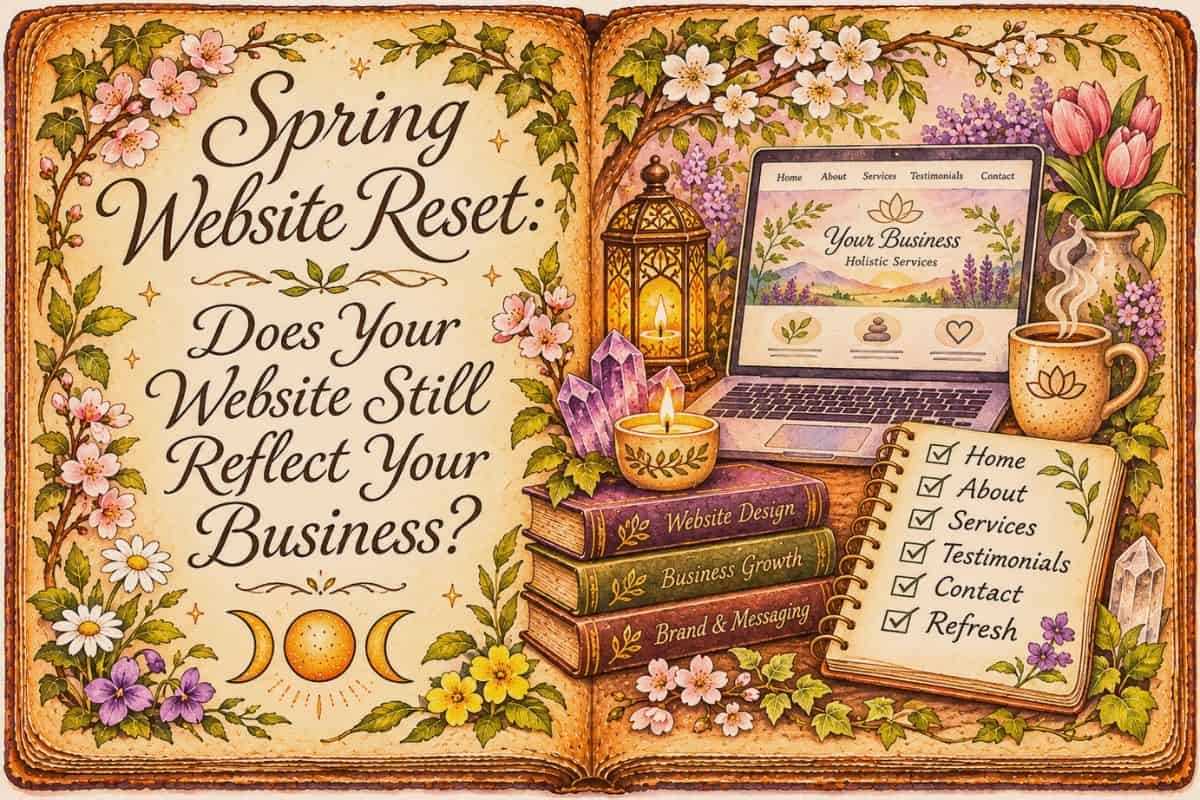
A spring website reset is a once-a-year check that your website still reflects the business you run now. Set aside an hour to read your About page, check every service and price, review your imagery, test your homepage headline and try your contact and booking journey as a new visitor would. Often a few small updates are enough.
There is something about the Spring Equinox that makes us want to throw open the windows, clear out what has become stale and make space for something new. For spiritual entrepreneurs, holistic practitioners, healers and soul-led businesses, that instinct to reassess can extend beyond our homes and into the businesses we have created. You might cleanse your space, refresh your altar, set new intentions or tidy the corners ignored through winter.
When did you last look at your website with the same attention? For many people, a website is built at a particular moment in time. It reflects the business as it was then: the services you offered, the language you used and the clients you thought you wanted. Then the business evolves. Your confidence grows. Your work becomes more refined. You change your offers, deepen your experience, understand your audience more clearly and begin speaking about your work differently. The website, meanwhile, quietly stays where it was. Spring is a lovely moment to change that.
You are not the same person who first built your website
Think back to when you first created your website:
- What were you offering?
- How did you describe yourself?
- Who did you think your ideal client was?
- What did you want people to understand about your work?
Now think about your business today. Something has probably shifted. You may have become much clearer about who you want to work with. You may have trained in new modalities or built a deeper body of experience. Your services may have changed completely. You may finally have the confidence to describe your work honestly rather than cautiously. Your website is often someone’s first real introduction to your business. If it still tells an old version of the story, it creates a subtle disconnect before a potential client ever speaks to you.
Signs your website has fallen behind you
Sometimes the signs are obvious. Other times, you only notice them when you stop looking at your website as its owner and experience it as a new visitor.
You feel awkward sharing the link
If someone asks for your website and you immediately start explaining that it is outdated, unfinished or “not really me anymore”, that is useful information. You should not need to apologise for your website before someone has opened it. It doesn’t have to be perfect. It simply needs to be a reasonably accurate reflection of the business you are proud to run today.
Your services have changed
Perhaps you have retired old offerings, introduced new ones or changed the way you work completely. If your website still promotes services you no longer want to deliver, or doesn’t mention the work you most want to be known for, potential clients are meeting the wrong version of your business. Confusion creates friction. Clarity makes it easier for people to decide whether your work is right for them.
Your photos no longer feel like you
Brand photography can date surprisingly quickly, especially when your visual identity has evolved. Your personal style may have changed, your branding may be different, or you may still be using generic stock images that never captured your personality. Visuals speak before people read a single word. If your images feel disconnected from who you are now, the whole website can feel slightly off.
The words sound like a previous version of you
This is one of the biggest signs. Read your About page and homepage aloud, and ask:
- Would I actually say these words now?
- Does this sound like how I talk about my work today?
- Is it vague, over-polished or full of language I’ve outgrown?
Your website words should evolve alongside your confidence and clarity. When your voice changes, your website often needs to change too.
Your practical information is out of date
Old prices, outdated booking links, broken contact forms and testimonials for services you no longer offer can all quietly erode trust. These things are easy to overlook because you already know how your business works. A new visitor does not. They can only work with the information you give them.
The Spring Equinox as a natural reset point
One of the things I love about working with the Wheel of the Year is that it gives us natural moments to pause and reassess. The Spring Equinox is associated with balance, renewal and the visible return of growth. It is a beautiful point in the year to notice what has become outdated and decide what needs refreshing. Your website can be part of that.
Once a year, sit down and ask yourself: does this still represent me?
You may not need a full redesign. Sometimes a website simply needs a few thoughtful updates: a rewritten About page, refined service descriptions, new images or a clearer homepage headline. If your business has changed significantly, or your website hasn’t been touched for several years, a more substantial redesign may make sense. These 10 signs you’ve outgrown your DIY website can help you decide. The aim is not to change things for the sake of it. It is to make sure your website reflects the business people meet today.
A simple spring website audit
Set aside an hour and go through your website as though you were discovering your business for the first time.
1. Read your About page
- Does it feel current?
- Does it sound like you?
- Does it explain why you do this work, and help the right person see why they might want to work with you?
Your About page should create connection rather than simply list your background. My guide on how to write an About page that connects can help.
2. Check every service or offering
- Are all your services still available?
- Are the prices correct?
- Do the descriptions reflect how you talk about those offers now?
- Would a new visitor understand what you want them to book?
3. Review your imagery
Look at your photos, colours, graphics and visual style.
- Do they still feel like the current version of your brand?
- Do they create the atmosphere you want visitors to feel?
You do not need to rebrand every year, but your visual identity should still feel intentional. For guidance, see how to choose website colours and fonts for a spiritual business.
4. Read your homepage headline
Your homepage should make it easy for someone to understand what you do. Not eventually. Quickly. Can a new visitor tell who you help and what you offer without scrolling through half the page? If not, your homepage may need more clarity.
5. Test your contact and booking journey
- Click every important button
- Fill in your contact form
- Check your booking links
- Do all of this on your phone too
Is the process simple and welcoming? Does the next step feel obvious? Even a beautiful website can lose enquiries if the path to working with you feels confusing. If enquiries have slowed, read why am I not getting enquiries from my website?
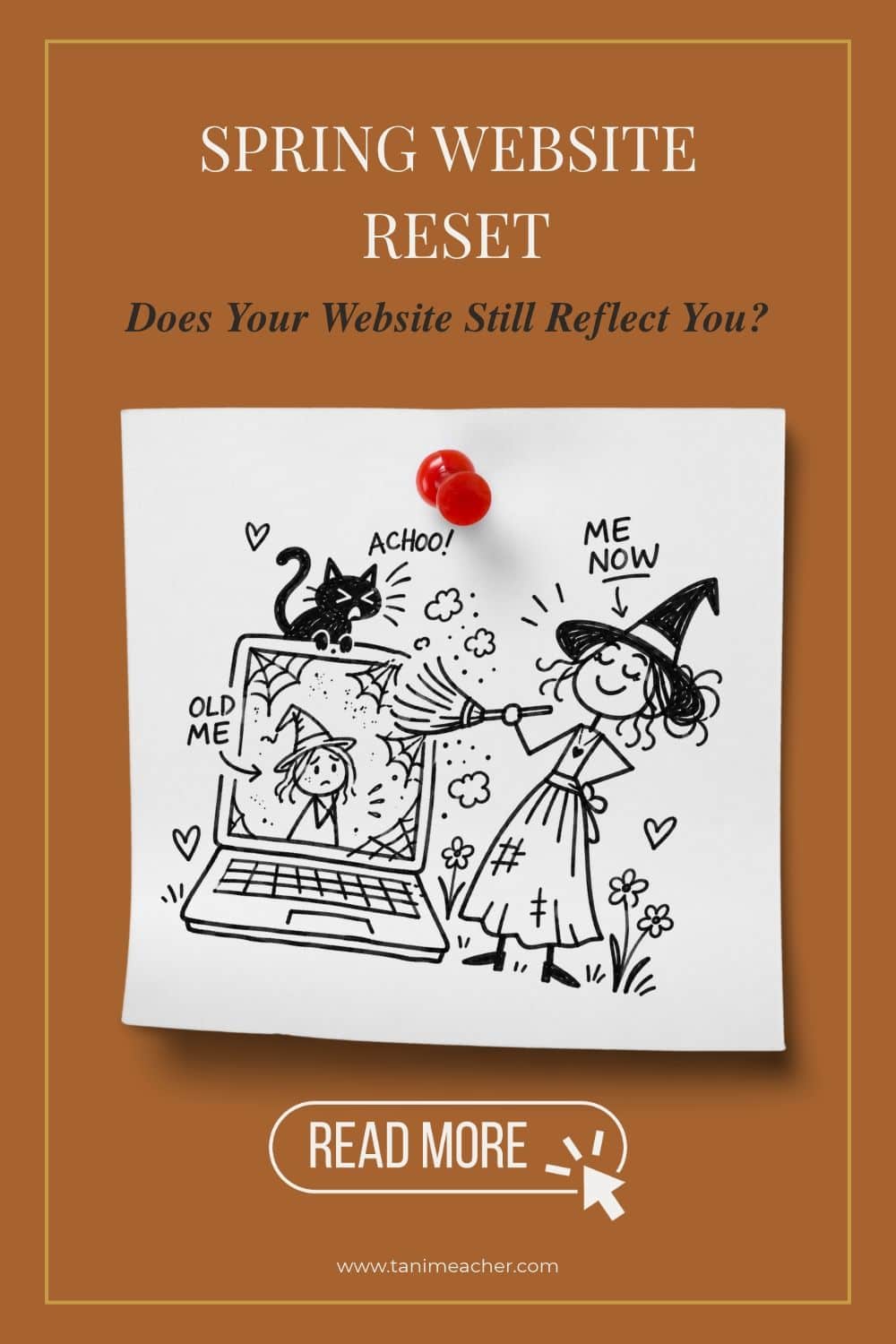
Small changes can make a big difference
A website refresh does not always need to become a major project:
- Updating one headline can create more clarity
- Replacing three photographs can change the atmosphere of a whole page
- Removing an old service can make your client journey much easier to follow
The key is noticing where your website no longer matches the business behind it. That is why regular reviews matter.
Let your website catch up with you
If your website no longer feels like the business you have grown into, that does not mean there was anything wrong with the site you first created. It may simply mean your work has moved on. Your offers have changed. Your confidence has grown. Your audience has become clearer. Perhaps you finally understand exactly what you want your business to be known for. Your website deserves to evolve alongside that. Use spring as your invitation to look at it with fresh eyes, make the small changes that are overdue, and recognise when something more substantial is needed. The person discovering your business today should meet the version of you that exists today, not the one who first pressed publish several years ago.
Frequently Asked Questions
How often should I update my website? Review it properly at least once a year, and update it whenever your services, prices or ideal clients change. Small regular updates are easier than one big overhaul.
Do I need a new website or just a refresh? If your website mostly works but feels a little out of date, a refresh is often enough. If your business has changed significantly or the website is hard to update, a redesign may be simpler.
When is the Spring Equinox? In the UK, the Spring Equinox usually falls around 20 or 21 March, marking the point when day and night are roughly equal in length.