
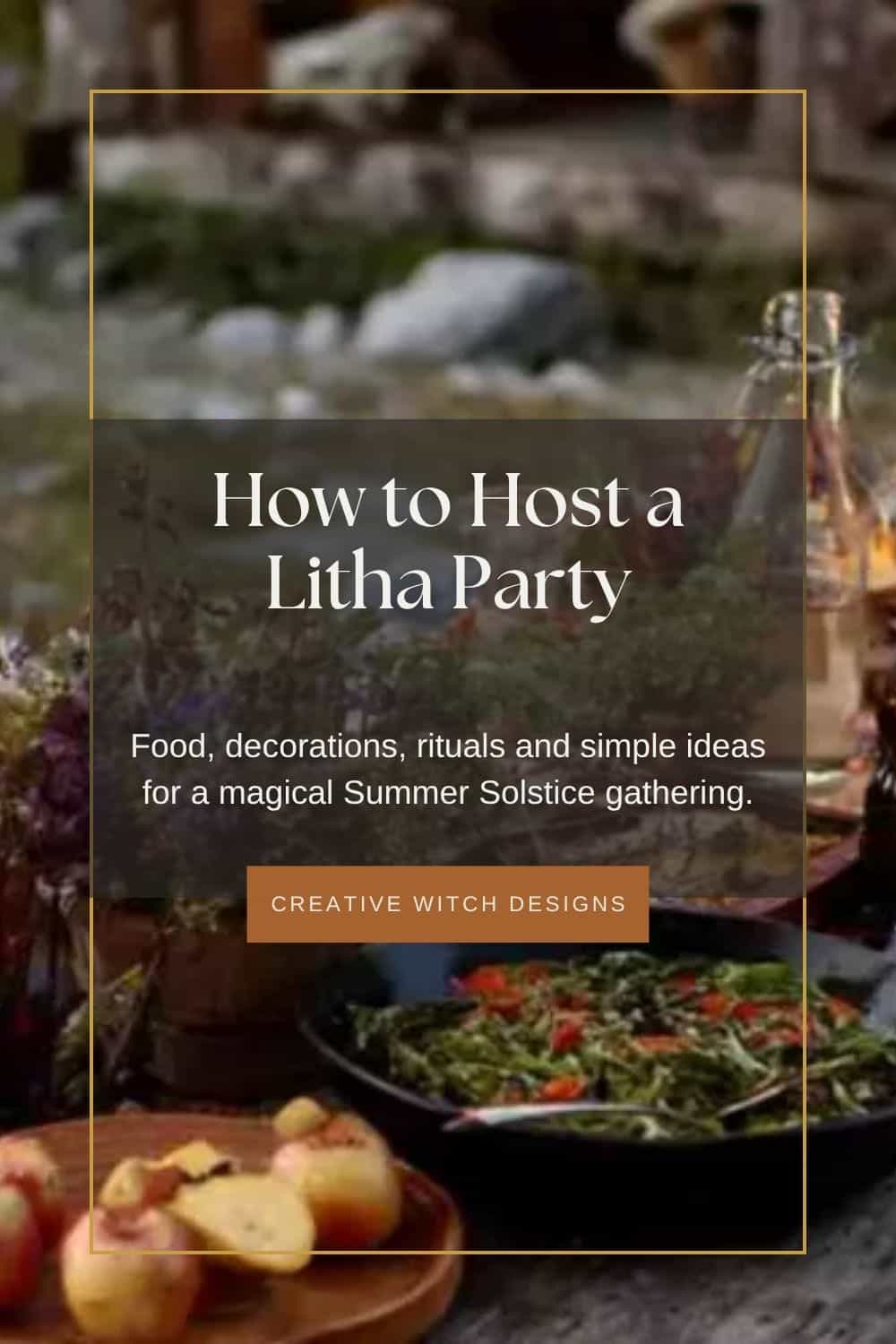
The Summer Solstice, often known in contemporary pagan and witchcraft traditions as Litha or Midsummer, marks the longest day and shortest night of the year. It is the point at which the sun reaches its greatest height before the year begins its gradual turn back towards the darker half of the cycle.
Across different cultures and traditions, midsummer has long been associated with gathering, feasting, fire, music, seasonal plants and celebration. That makes Litha a natural time to bring people together, whether you are planning a small gathering with a few close friends or a larger outdoor celebration.
A Litha party does not need to feel theatrical or over-planned. The strongest gatherings usually come from creating a warm atmosphere, sharing good food, spending time outdoors and including one or two meaningful seasonal elements that help everyone recognise the turning of the year.
Choose a setting that connects you with the season
If the weather allows, Litha naturally lends itself to being celebrated outdoors. A garden, woodland clearing, beach, field or local green space can give the gathering an immediate sense of connection with the season.
You do not need a dramatic location. Even a small garden or courtyard can work beautifully if you make use of the evening light and bring in seasonal greenery, flowers and natural textures.
Think first about how you want the gathering to feel. A relaxed picnic on blankets will create a very different atmosphere from a long decorated table, while a small evening fire gathering feels different again.
Choose the setting to suit the people coming rather than trying to recreate an imagined historical festival.
If you need to celebrate indoors, bring the season into the space instead. Open the windows, use flowers and herbs, bring in natural materials and allow plenty of warm light.
Build the atmosphere around midsummer
Litha decorating works best when it feels abundant without becoming cluttered.
Warm gold, yellow, deep green, orange and soft red all work naturally with midsummer, but you do not need to use every solar colour at once.
You might use linen tablecloths, candles, lanterns, wildflowers, bowls of fruit, herbs and simple greenery. Ribbons tied into trees or chairs can add movement without requiring elaborate decorations.
Flowers and herbs such as lavender, rosemary, chamomile, daisies or roses can be used in table arrangements, garlands or small bunches around the space.
The aim is to create a setting that feels connected to early summer rather than making every object overtly “witchy”.
Sometimes the most magical atmosphere is simply candlelight, flowers, food and people gathered together outdoors as the sun begins to lower.
Plan a seasonal feast
Food is one of the easiest ways to make a solstice gathering feel generous and communal.
Rather than trying to create a historically accurate midsummer menu, work with foods that are genuinely seasonal and enjoyable where you live.
Fresh salads, herbed breads, grilled vegetables, cheeses, summer fruit, strawberries, cherries, berries and honey all fit naturally into a June gathering.
Dessert can be simple. A strawberry tart, fruit cake, honey cake or bowls of berries with cream can feel far more appropriate than anything overly elaborate.
For drinks, you might serve homemade lemonade, elderflower cordial, herbal iced tea or a fruit punch. If your gathering includes alcohol, wine, cider or a light summer cocktail can sit alongside the non-alcoholic options.
The important thing is abundance through sharing rather than excess.
A table where everyone brings one dish can feel especially appropriate for a seasonal celebration because the feast becomes collective.
Create one shared ritual moment
If your guests are comfortable with ritual, include one simple moment that marks why you have gathered.
This does not need to become a long ceremony.
You might gather everyone shortly before sunset and invite each person to name something from the first half of the year that they are grateful for.
Another option is to light a central candle and allow each person to light a smaller candle from it, creating a circle of shared light.
You could also place a bowl of water, flowers or herbs in the centre of the group and invite everyone to add something to it while silently setting an intention for the months ahead.
The most important thing is that the ritual fits the group.
If half your guests are not particularly spiritual, keep it accessible and simple. A moment of gratitude or reflection can still feel meaningful without requiring everyone to share the same beliefs.
Include a creative activity
A seasonal craft gives people something to do with their hands and can create a lovely focal point during the gathering.
A flower-crown table works especially well because guests can join in as much or as little as they like. Provide flexible wire or twine, ribbons, flowers and herbs, then let people make crowns, small wreaths or simple floral pieces.
You could also create a station for making sun wheels, herb bundles or small seasonal charms.
Choose one activity rather than offering six different craft options. Too much choice can make a relaxed gathering start to feel like an organised workshop.
The best activity is one people can pick up naturally while talking, eating and spending time together.
Bring in midsummer folklore and storytelling
If your group enjoys history, folklore or mythology, storytelling can make the gathering feel much richer.
You might share a short piece of local midsummer folklore, a story associated with a plant growing nearby, or a traditional belief connected with the Summer Solstice.
This is also a lovely place to include local material rather than relying entirely on generic pagan references.
What midsummer traditions existed in your region?
Which plants were associated with protection or celebration?
Were there local fairs, fires or seasonal customs?
Bringing place into the gathering makes it feel more grounded and specific.
You could also invite guests to share summer memories, family traditions or stories of celebrations they remember from childhood.
Use fire safely and simply
Fire has a strong association with midsummer, but it does not need to dominate the gathering.
If you have a safe and legal place for a fire, a small firepit can create a beautiful focal point as the evening cools.
If that is not possible, candles or lanterns create much of the same atmosphere without the practical complications.
You might gather around the fire towards the end of the evening and allow each person to privately reflect on something they want to leave behind or something they want to carry forward.
There is no need to burn written fears, dramatic declarations or personal material unless that genuinely suits the group.
Fire can simply be fire.
Warmth, light and a point around which people gather.
Add music and movement
A solstice gathering does not need to be solemn.
Music helps shift the energy from ritual into celebration.
Create a playlist in advance with songs that feel warm, earthy, joyful or nostalgic. You might include acoustic music, folk, drumming, familiar summer songs or anything that encourages people to relax.
If dancing happens naturally, let it happen.
If it does not, there is no need to manufacture it.
The spirit of Litha is not about performing joy correctly. It is about creating enough space for people to enjoy themselves.
Offer simple take-home gifts
A small gift can be a lovely way to close the gathering, but it should remain simple.
A tiny jar of honey, a small bundle of dried herbs, a packet of flower seeds or a handmade candle can all work beautifully.
You could also give guests a short printed midsummer blessing, journal prompt or seasonal recipe.
The gift does not need to be expensive. Its purpose is simply to carry a little of the gathering home.
Think about the practical details too
A magical atmosphere is lovely, but practical comfort matters just as much.
If you are outdoors, think about seating, shade, blankets, insect repellent, lighting, toilets and what happens if the weather changes.
Let guests know whether they need to bring layers, cushions or food.
If children are coming, make sure candles, fire and craft materials are arranged safely.
You should also be thoughtful about plants and flowers. If you are gathering anything from the wild, make sure you can identify it correctly, avoid protected species and take very little.
Good hosting creates ease.
People are much more able to relax into the atmosphere when the basics have already been considered.
How to close a Litha gathering
You do not need a formal ending, but it can be lovely to mark the transition from gathering back into ordinary life.
As the light begins to fade, you might bring everyone together for a final toast, a few words of gratitude or simply a moment to watch the sunset.
If you used a central candle, this might be the point at which you extinguish it.
You could thank the land, thank the people who came, and acknowledge the turning of the season.
Then let the evening continue naturally.
The most memorable gatherings often end slowly, with people talking around the table or fire long after the planned part has finished.
A Litha party does not need to be elaborate
The Summer Solstice already brings its own atmosphere.
The long evening, the light, the flowers, the warmth and the season itself are doing most of the work.
You do not need a complicated ritual schedule or a garden that looks like a midsummer film set.
Gather people you enjoy being with.
Share food.
Add flowers.
Light candles.
Tell stories.
Make something.
Watch the sun go down.
That is enough to create a meaningful midsummer celebration.
Explore more June witchcraft
If you want to explore the wider meaning of Litha, Summer Solstice correspondences and seasonal practices, read:
June Witchcraft: Litha, Correspondences, Rituals & Summer Solstice Magic