
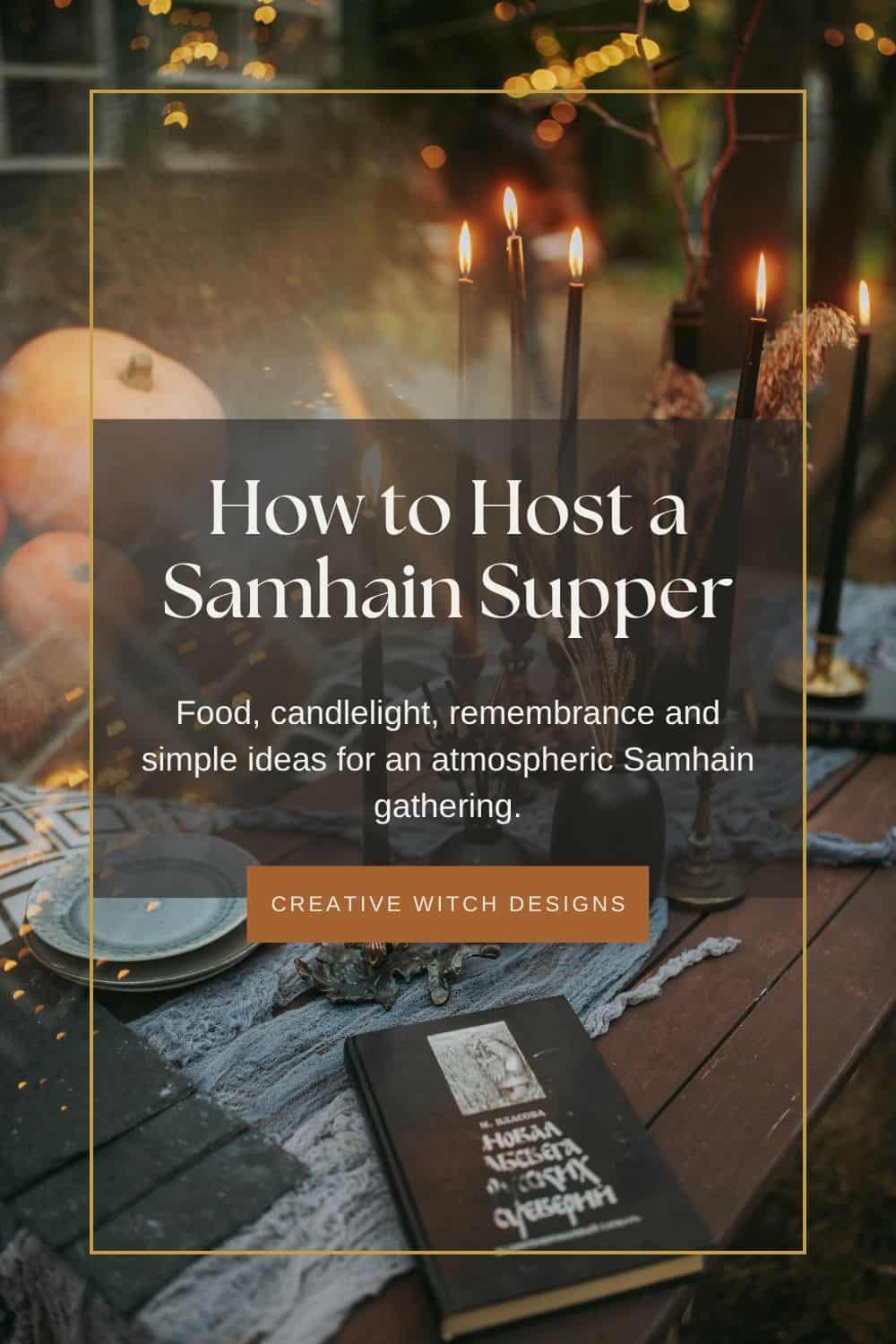
A Samhain supper can be one of the most intimate ways to mark the end of October.
Rather than creating a Halloween party filled with costumes and decorations, a Samhain gathering can centre around food, candlelight, stories and remembrance.
It can be spiritual without becoming solemn. It can honour the dead while still containing laughter. It can include ritual without making guests feel uncomfortable.
At its heart, it is simply a table where people gather as the year turns towards winter.
Decide what kind of gathering you want
Before planning the details, decide how you want the evening to feel.
You might host a small supper with close friends.
You might invite family and create an evening centred on shared memories.
You might gather with people who actively practise witchcraft and include more formal ritual.
The tone should reflect the people coming.
If some guests do not share your spiritual beliefs, avoid making participation compulsory.
A gathering can honour Samhain through candlelight, food and storytelling without everyone needing to interpret those things in the same way.
Create an atmospheric table
Samhain lends itself beautifully to darker, richer decoration.
Use candles, linen, autumn foliage, apples, small pumpkins, dried herbs and seasonal flowers.
Black, deep burgundy, burnt orange, brown and antique gold work naturally, but the table does not need to look like a theatrical set.
Leave space.
Food and people should remain the focus.
You might place one candle in the centre specifically for remembrance.
That single element can carry more meaning than a table crowded with symbols.
Create a remembrance space
Set up a small table or section of the room with photographs or names of people you want to remember.
Invite guests to bring a photograph if they wish.
They might also bring a written memory, flower or small object.
Do not assume everyone has a comfortable family history or wants to honour their biological ancestors.
The remembrance space can include anyone meaningful who has died, including friends, mentors and chosen family.
That makes the gathering more inclusive and more genuine.
Plan a simple autumn feast
Samhain food works best when it is warming and uncomplicated.
Think soup, stew, roasted vegetables, bread, potatoes, apples, nuts and autumn desserts.
You might serve a large vegetable or meat stew with fresh bread, followed by baked apples, apple crumble or a dark chocolate dessert.
Mulled apple juice, cider, herbal tea or wine can work beautifully alongside the meal.
You do not need to create an enormous menu.
A Samhain supper is more about atmosphere and sharing than culinary performance.
Include food with memory attached
One particularly meaningful idea is to ask guests to bring or suggest a dish connected with someone they remember.
Perhaps a grandmother always made a particular cake.
A parent loved a certain meal.
A friend had a favourite drink.
Food creates extraordinarily strong memory.
Including one or two dishes with personal history gives the table a depth that generic seasonal recipes cannot reproduce.
Consider a silent supper
Some contemporary practitioners observe what is often called a dumb supper, using the older meaning of the word “dumb” as silent.
You might prefer to call it a silent supper.
Traditionally, the meal is eaten quietly, with a symbolic place set for the dead.
You do not need to conduct the entire meal in silence.
A short period can be enough.
Perhaps everyone eats the first few minutes quietly and remembers someone privately before conversation begins.
This creates a meaningful pause without making the evening uncomfortable.
Set a symbolic place at the table
If it feels appropriate, leave one place empty.
Add a candle, flower or simple plate.
This can represent the people being remembered collectively rather than one specific person.
Explain the symbolism briefly so guests understand why the place is there.
There is no need to make claims about spirits literally occupying the chair.
The empty place works powerfully as a symbol in its own right.
Share stories
After the meal, invite people to tell a story about someone they remember.
Encourage ordinary memories.
Funny stories.
Habits.
Favourite sayings.
Things they cooked.
Music they loved.
Places they went.
Remembrance becomes much richer when people are remembered as full human beings rather than only through the circumstances of their death.
If someone does not want to share, allow them simply to listen.
Include a simple candle ritual
Place a central candle somewhere safe.
Invite each guest to light a smaller candle, or simply pause beside the main flame, while thinking of someone they wish to remember.
They can speak a name aloud if they want to.
They can remain silent if they prefer.
Once everyone has taken part, allow the candles to burn while you continue the evening.
Keep dried foliage and decorations well away from flames.
Add a little divination
If it suits your guests, you can include tarot or oracle cards after dinner.
Keep the atmosphere playful and reflective rather than making dramatic predictions.
You could place a deck on the table and invite each guest to draw one card around the question:
“What wisdom am I carrying into winter?”
It creates an easy bridge between the communal meal and the quieter symbolism of Samhain.
Make room for folklore
A Samhain gathering is a perfect setting for old stories.
You might read a piece of folklore from Britain or Ireland, share a local ghost story or talk about historical customs connected with Halloween and Samhain.
This can be especially enjoyable once the meal is finished and the room is lit mainly by candles.
Stories belong naturally beside food and fire.
They have probably been shared that way for far longer than any of us can trace.
Finish the evening gently
There is no need for a dramatic closing ceremony.
Bring everyone together once more before they leave.
Thank them for coming.
Acknowledge the people who were remembered.
Extinguish the central remembrance candle.
You might offer one simple thought for the season ahead, such as carrying the stories of those we love into winter.
Then allow the evening to finish naturally.
Send guests home with something small
If you want to give guests something, keep it simple.
An apple.
A small candle.
A bundle of rosemary.
A handwritten remembrance prompt.
A packet of seeds.
The gift does not need to be overtly magical.
It simply marks the fact that you gathered together at a particular point in the turning year.
A Samhain supper is ultimately about memory
You do not need to create the perfect ancestral ritual.
You do not need everyone dressed in black.
You do not need elaborate spellwork.
Gather people.
Cook food.
Light candles.
Say names.
Tell stories.
Remember.
There is something deeply human about sitting around a table and making space for people who are no longer sitting there with us.
That, more than anything else, is what can make a Samhain supper feel sacred.
Explore Samhain
For more about the festival itself, its seasonal roots and ways to mark it, read: